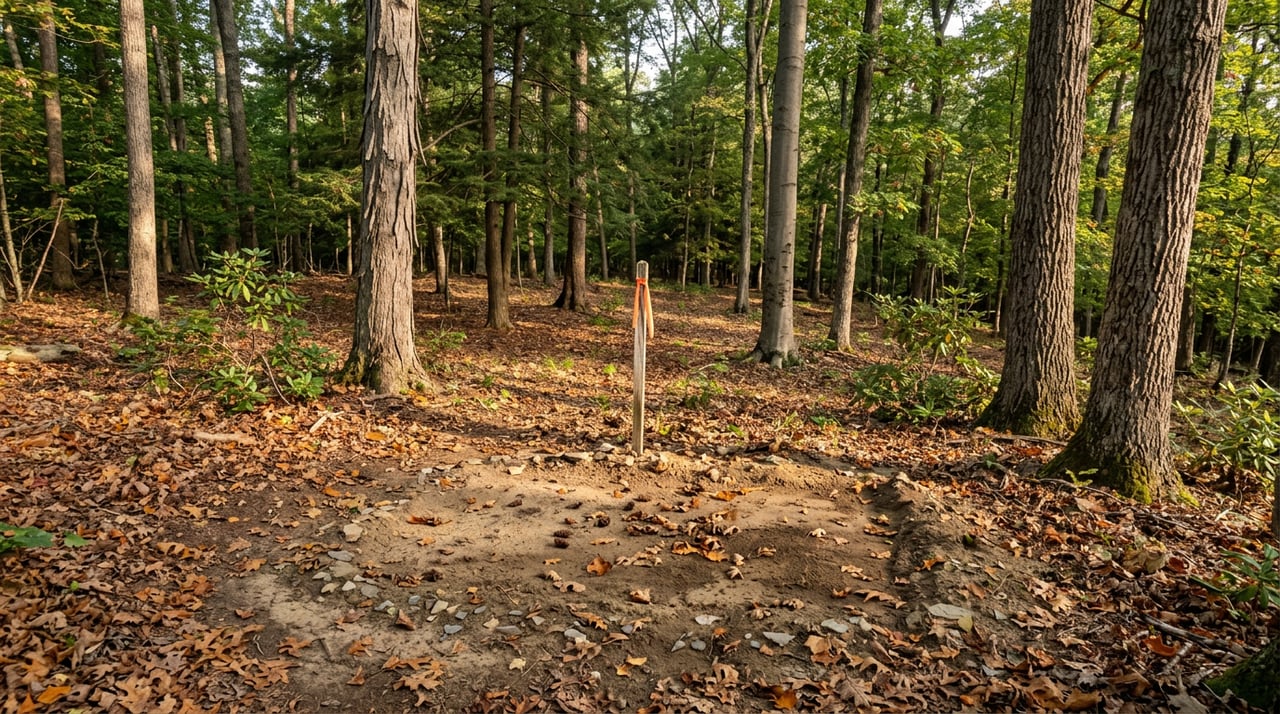
Pull up three vacant lots in Effort, Pennsylvania right now, all roughly an acre, all priced within a few thousand dollars of each other, and you will find three completely different deals hiding behind nearly identical listing photos.
Same price range. Same rough acreage. Same wooded Pocono lot aesthetic in the photos. Completely different amount of time and money standing between you and a buildable home.
If you are shopping vacant land in Effort as an investor or a future builder, this is the number that actually matters, more than price per acre, more than square footage, more than proximity to Route 115. It is whether the soil under that specific parcel has been tested, who tested it, and whether whatever permit exists is still alive.
Three Lots, Three Different Clocks
Land listings in and around Effort tend to bury this detail in a single line of agent remarks, which is exactly why it gets missed.
Why the Zip Code Doesn't Tell You Who to Call
Part of the reason this varies so much lot to lot is that Effort's own ZIP code, 18330, is not one township's jurisdiction. It stretches across Chestnuthill Township, Polk Township, and Tunkhannock Township, three separate municipal governments each administering their own on-lot sewage program under Pennsylvania's Act 537.
Chestnuthill Township contracts its SEO duties to Hanover Engineering Associates, Inc. Polk Township and Tunkhannock Township each run their own arrangement, with their own fee schedule and their own backlog. A lot ten minutes down Route 115 in a different township is not just a different mailing address. It is a different office, a different queue, and potentially a different number of weeks before anyone shows up to dig a test hole.
This is worth confirming before you get attached to a specific parcel. The fastest way to find yours is a call to the township office rather than a search engine, since the state's own directory is not always current.
What "Perc Test Pending" Actually Costs You
Once you know who your SEO is, the process itself is fairly standardized under state code, but the cost and time still add up in a way that belongs in your offer math, not a surprise after closing.
| Step | Typical Cost | Typical Timeline |
|---|---|---|
| Site evaluation (soil probes and percolation test) | $300 to $600 | Scheduled around SEO availability, often booked out through spring and fall |
| Permit application review | $250 to $750 | Pennsylvania DEP says the SEO must approve or deny within 7 days of a complete application |
| Alternative system design (if needed) | Additional engineering cost | 4 to 8 weeks beyond a conventional system timeline |
Pennsylvania code requires a minimum of six separate test holes spaced across the proposed absorption area, and Septic and Well gives the acceptable percolation rate for a conventional system as roughly 3 to 180 minutes per inch. Land that drains too fast or too slowly means moving to a costlier alternative design.
None of this is unique to Effort. What is worth pausing on is how it stacks with the multi township reality above. A soil evaluation booked in July in one township's queue and a soil evaluation booked in July in a neighboring township's queue are not the same wait, because they are not the same office.
The Permit Expiration Nobody Mentions in the Listing
Here is the distinction that catches buyers off guard most often. There are two different soil evaluations you can get on a piece of land, and they are not the same thing even though they use the same test.
A vacant land evaluation tells you whether the parcel will perc, full stop. It is useful diligence before you buy.
A septic permit evaluation, by contrast, is tied to an actual construction permit. It includes specific design specifications.
When you see a listing advertising a septic permit already in hand, check whether the permit is current before you rely on it.
Why Effort's Ground Makes This Harder Than It Sounds
Rocky terrain and shallow bedrock are common across Monroe County, and they push a meaningful share of Pocono area lots toward sand mound systems rather than conventional in ground drainfields. Sand mounds cost more to design and install because they are built up rather than dug in, compensating for bedrock or a high water table close to the surface. If your SEO's evaluation comes back recommending a mound system, budget for it before you fall in love with a specific price per acre, because that number was set without knowing which type of system the lot will actually require.
Before You Write the Offer
If you are seriously considering a vacant lot in the Effort area, a short sequence protects you from most of the surprises above.
- Identify which township the parcel sits in, not just the mailing ZIP code, and get the name and contact for that township's SEO.
- Ask the listing agent directly whether any perc test on file was a vacant land evaluation or a construction permit evaluation, and if a permit exists, ask for its issue date and expiration.
- Build a soil evaluation contingency into your offer if no current test exists, rather than assuming the listed acreage is automatically buildable.
- Ask what the SEO's current scheduling backlog looks like before you set a closing date, especially heading into the busy spring and fall testing season.
- Price in the possibility of a sand mound system if the parcel sits on rocky or high water table ground, rather than assuming a conventional system.
None of these steps require a specialist. They require asking the right question of the right office before you are under contract, not after.
Frequently Asked Questions
If a lot already has a passed perc test, do I still need to check anything? Yes. Confirm whether that test was a vacant land evaluation or a permit evaluation, and if it is the latter, confirm the permit has not expired.
Why would the same size lot cost more to develop in one part of Effort than another? Different townships within the 18330 ZIP code, including Chestnuthill, Polk, and Tunkhannock, each run their own Sewage Enforcement Officer with a separate fee schedule and scheduling backlog. Terrain also varies enough across the area that some lots need a standard system while others require a costlier sand mound design.
How long does the permit process typically take once soil testing is complete? The Sewage Enforcement Officer must approve or deny a complete permit application within 7 days. The longer variable is getting to that complete application in the first place, since soil testing itself can be delayed by frozen winter ground or a wet spring, and by how far out the SEO is currently booked.
Buying land in the Poconos rewards buyers who ask about the soil before they ask about the view. If you are looking at parcels in Effort, Chestnuthill Township, or anywhere else across Monroe, Carbon, Pike, or Wayne counties and want a second set of eyes on what a listing's septic status actually means for your timeline, John D. Keely at PoconoFindAHome has spent roughly 25 years working these exact deals and is glad to walk through it with you before you write an offer.
This article is general information, not legal, tax or financial advice. Consult a qualified professional about your situation.