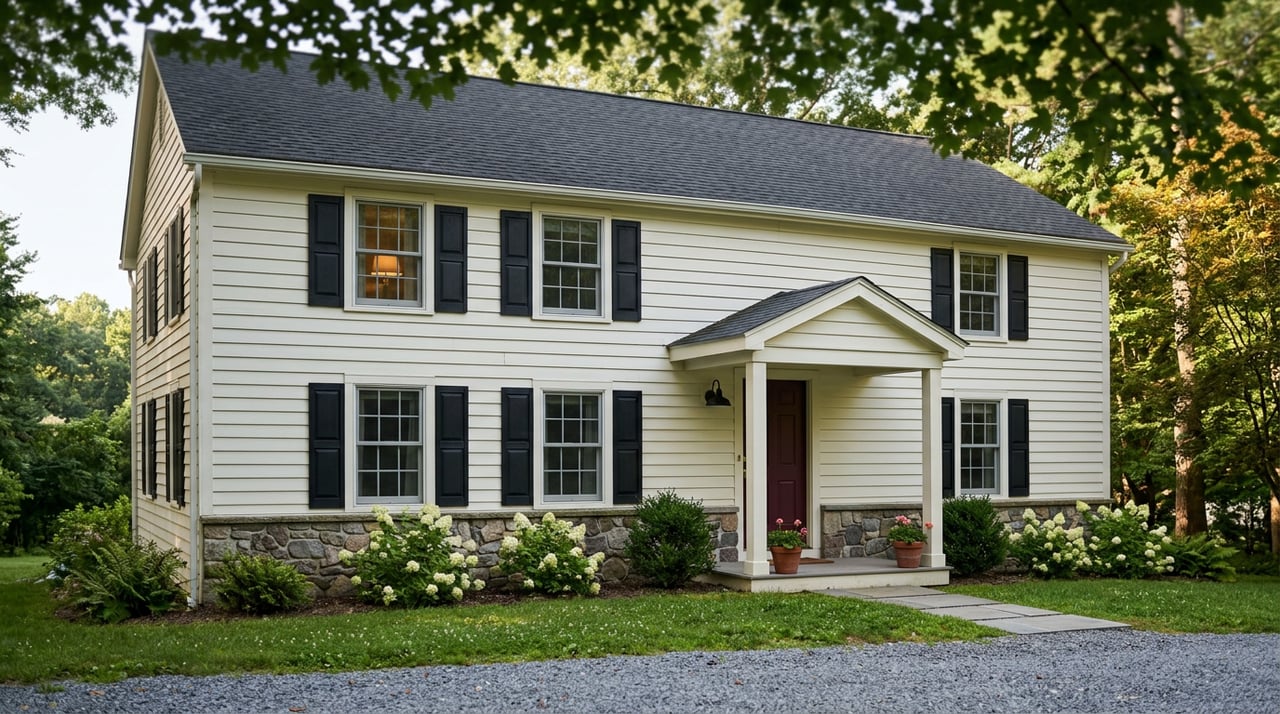
Why do so many Saylorsburg sales that looked finished after the walkthrough stall out three weeks later, once the septic tank gets uncovered? It rarely has anything to do with the house itself. The kitchen shows well, the roof is new, the buyer has already picked out furniture. Then the inspection contingency period starts, someone locates the tank lids, and the timeline that felt settled becomes a negotiation again.
That sequence is common enough in Saylorsburg that it deserves its own explanation, separate from the general advice about staging and curb appeal that applies everywhere. This is a market built on larger lots served by private wells and on-lot septic systems rather than municipal water and sewer, and the rules that govern those systems are less standardized, less visible, and less understood by buyers and sellers than almost anything else in the transaction.
No Statewide Rule, One Township's Own Code
Pennsylvania does not require a septic inspection before a home can change hands. There is no statewide point-of-sale mandate. Instead, the decision is left to each municipality, and whether a Saylorsburg sale triggers a mandatory inspection depends on the specific township the parcel sits in.
Most of Saylorsburg falls within Chestnuthill Township, which has had its own sewage disposal ordinance on the books since 1988. Chapter 88 of the township code sets out permitting and inspection requirements for new and repaired on-lot systems, prohibits the use of holding tanks as a permanent disposal method, and requires a final inspection by the township's Sewage Enforcement Officer before any new system can be buried. What the code does not spell out is a blanket requirement to inspect an existing system simply because a property is changing hands. That responsibility sits with Hanover Engineering Associates, Inc., the firm serving as Chestnuthill Township's Sewage Enforcement Officer, and confirming exactly what applies to a specific parcel means calling that office directly rather than assuming a state or county rule covers it.
Financing Fills the Gap the Law Leaves Open
Here is where the absence of a state mandate stops mattering as much as it sounds like it should. Even where a township has no resale requirement, most buyers using FHA, VA, or USDA financing will hit a septic and well requirement anyway, because those loan programs build the check into their own underwriting standards. FHA and VA guidelines almost always require proof that a septic system functions properly before the loan closes, and the same federal loan minimums require testing private well water for coliform bacteria, nitrate, nitrite, and lead.
That means the actual gatekeeper of a Saylorsburg closing is rarely the township ordinance. It is the buyer's lender, showing up in week three of the contingency period with a requirement nobody negotiated because nobody thought to ask about it during the offer stage.
What the Inspection Catches, and What It Costs to Fix
A standard septic evaluation in Pennsylvania runs $300 to $600 and typically includes pumping the tank, checking the baffles, and evaluating the drain field. The findings that come out of that process fall into a fairly predictable range, and the cost to address them varies enormously depending on when the problem gets caught.
| Finding | Typical Cost | When It's Usually Caught |
|---|---|---|
| Overdue pumping, thick sludge layer | $300 to $500 | Pre-listing inspection |
| Cracked or deteriorating baffle | $200 to $500 | Pre-listing inspection |
| Failing drain field, replacement required | $10,000 or more | Buyer's inspection, mid-contract |
The gap between the first two rows and the third is the entire argument for a pre-listing inspection. A seller who pumps the tank and checks the baffles before listing is spending a few hundred dollars to rule out the possibility of a five-figure renegotiation happening after the buyer has already fallen for the house and started planning a move-in date.
The Square-Footage Clue Hiding in Saylorsburg's Own Listing Data
There is a detail in Saylorsburg's own listing data that most buyers scan past without registering what it means. Among current listings, the average home size in Saylorsburg runs well above the Monroe County average, a gap that tracks directly with lot size rather than home style. Bigger lots are what on-lot septic requires in the first place. A system needs enough land for a proper drain field, and the parcels that can support one comfortably tend to carry larger homes on them almost as a byproduct.
That connection matters for how a buyer should read a Saylorsburg listing. A larger home on a larger lot is not just more house. It is also, in most cases, a private well and a private septic system that the buyer is inheriting along with the square footage, whether or not that shows up anywhere in the listing description.
Saylorsburg's market has stayed active through the summer. Homes listed in June 2026 spent a median of 32 days on market, with a median list price around $479,000 for the month, figures that reflect a market moving at a normal pace rather than sitting. A 32-day median sounds fast until a septic finding pushes a specific deal past that window, which is exactly the scenario a pre-listing inspection is meant to prevent.
What's Actually in the Groundwater
Because Saylorsburg runs on private wells rather than a municipal water system, water quality is a due diligence item that buyers researching from farther away sometimes miss entirely. Federal data modeling for Monroe County puts nitrate levels at roughly 0.46 mg/L, well below the EPA's 10 mg/L limit but nearly double the statewide median of 0.24 mg/L, a gap large enough that the county is flagged among only two of Pennsylvania's 67 counties for nitrate. Arsenic exceedance probability sits around 3 percent, in line with the statewide median, meaning it is not a distinguishing risk here so much as a standard reason to test rather than assume.
None of this means Saylorsburg groundwater is unsafe. It means a well water test is not optional paperwork, it is the only way to know what a specific well actually contains, since the county-level modeling describes the area broadly and cannot predict any individual well's results. Elevated nitrate readings across a region are often tied to the density of on-lot septic systems nearby, which is one more reason the septic and well questions in Saylorsburg tend to travel together rather than showing up as separate line items.
Getting Ahead of It Before You List
The sellers who avoid the three-week stall are the ones who treat the septic and well systems as a pre-listing task rather than something to react to once a buyer's inspector finds it first. That means pumping the tank if it has not been done in the past few years, gathering whatever service records exist, and getting a water test done before a buyer's lender requires one on a deadline.
Two septic and well service providers based in Saylorsburg handle this kind of work regularly. Borger Septic Inc. offers pumping, inspection, and repair services out of Saylorsburg, and Semper Fi Pump Services, also based in Saylorsburg, specializes in well pump sales, service, and installation for the Pocono Mountains region. Getting either one out for a pre-listing check gives a seller a clear answer weeks before a contract is signed, rather than a surprise once one is.
Frequently Asked Questions
Does Pennsylvania require a septic inspection before I can sell my Saylorsburg home? No. Pennsylvania leaves that decision to individual municipalities. Whether a mandatory inspection applies to a specific Saylorsburg parcel depends on the township it sits in, which is why confirming directly with the local Sewage Enforcement Officer matters more than assuming a statewide rule covers it.
Who enforces septic and sewage rules in Chestnuthill Township? Hanover Engineering Associates, Inc. serves as the township's Sewage Enforcement Officer, handling permitting for new and repaired systems under the township's own sewage disposal ordinance.
What if my well tests positive for elevated nitrate or arsenic? Treatment options exist for both, and the first step is always a certified lab test, since county-level data describes area-wide probability rather than the condition of any specific well. A positive result does not necessarily kill a deal, but it does need to be disclosed and addressed as part of the transaction.
Who typically pays for septic repairs if an inspection finds a problem? This is negotiable between buyer and seller in most Pennsylvania transactions. Sellers can choose to make the repair themselves, split the cost, or offer a closing credit equal to the repair amount, though contract terms vary and should be spelled out clearly before the inspection contingency period ends.
Selling a home with a private well and septic system in Saylorsburg comes with questions that a generic pre-listing checklist will not answer. If you want a clear read on what your specific property needs before it goes on the market, or you are searching for a home here and want to understand what you would be inheriting underground, PoconoFindAHome can walk through it with you. Let's Connect — Start Your Pocono Home Search or Request a Valuation.